What 'Sun+Earth Certified' Actually Means — and Why We Fought for It
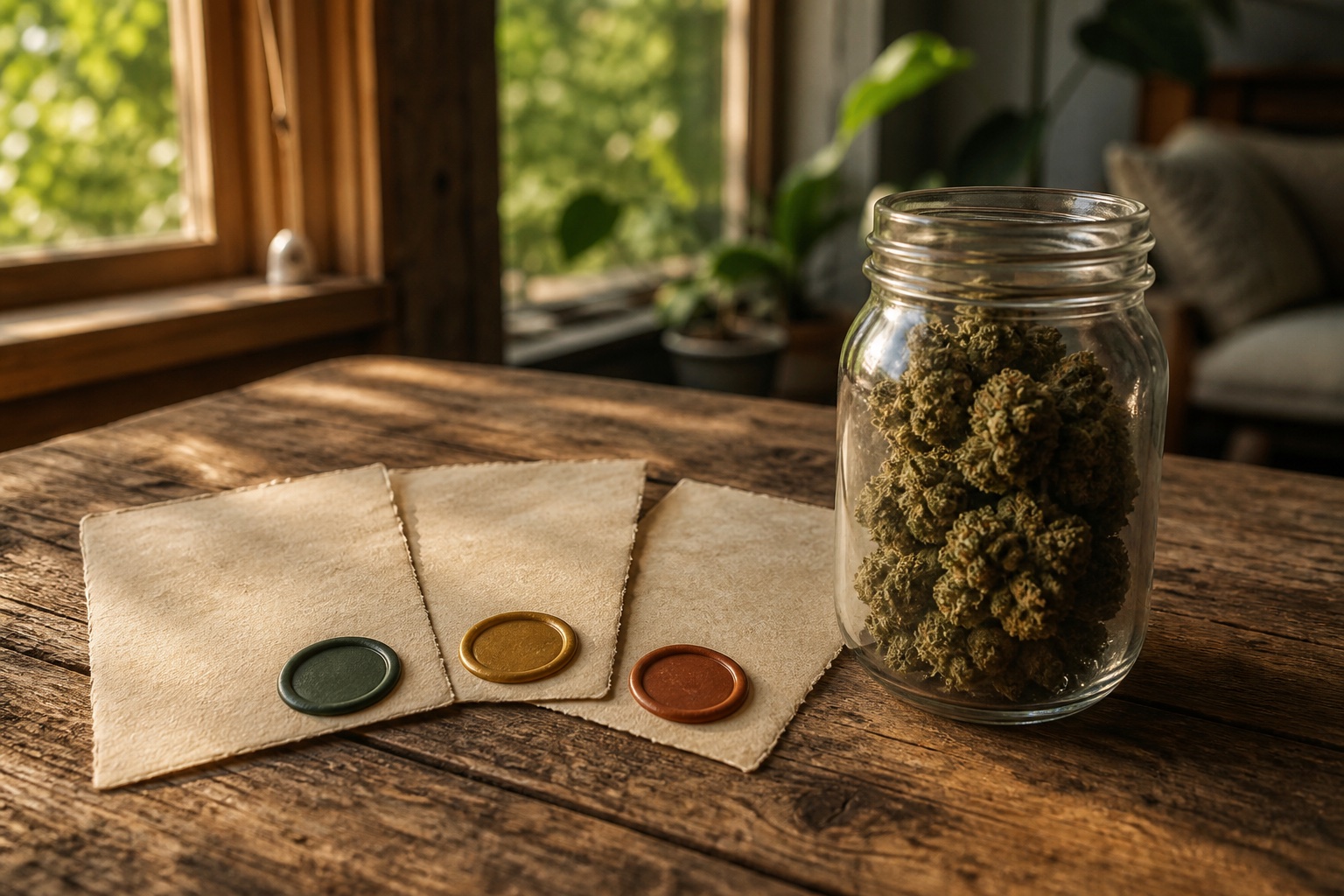
Sun+Earth Certified isn't just another sticker on a jar. It's a rigorous standard that goes beyond USDA Organic to ensure your cannabis is grown in living soil, under natural sun, by farmers who treat their workers and community right.
Questions this article answers
- what is Sun+Earth Certified cannabis
- Sun+Earth vs organic cannabis
- what does Sun+Earth Certified mean
- regenerative organic cannabis certification
- how is Sun+Earth cannabis different
Head Cultivator
On this page
Most cannabis certifications are just marketing — a paid sticker that doesn't actually check much beyond paperwork. Sun+Earth Certified is different. It was built for cannabis by people who know that growing good medicine takes more than just skipping synthetic pesticides. The standard has three must-haves: how you farm the plant, how you treat your workers, and how you give back to the community. At Divine Toke, we went after this certification not because it was easy, but because it was the only standard that matched what we were already doing — and pushed us to do it better.
What Are the Three Pillars of Sun+Earth Certification? #
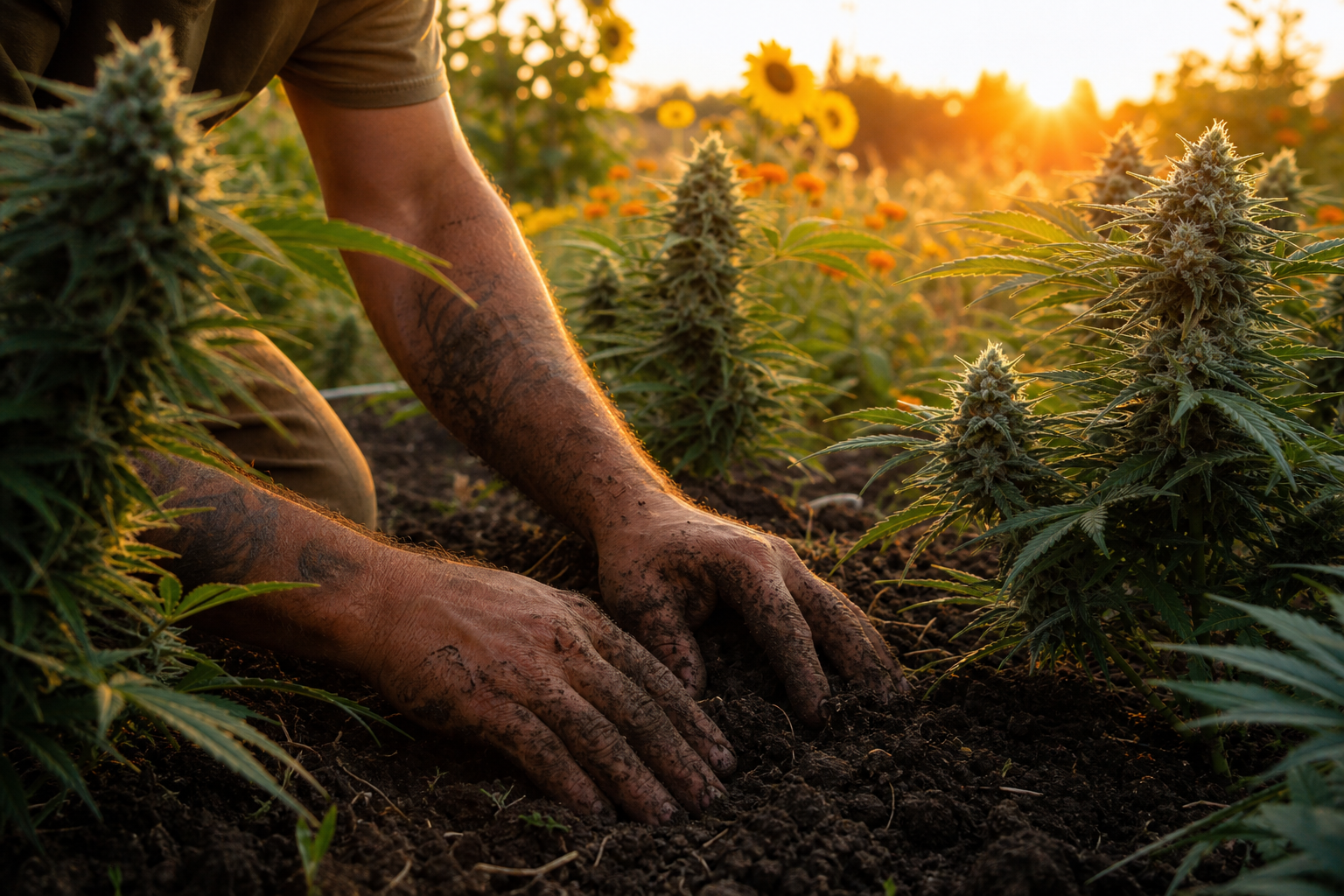
Sun+Earth certification stands on three pillars — Earth Care, Human Care, and Community Care — that together make the most thorough cannabis certification out there. These requirements go way past typical organic standards by requiring farming that builds the soil back up, fair pay for workers, and real community investment.
Pillar One: Earth Care and Organic Cultivation #
The foundation requires 100% organic growing with three years of clean land history on record. But Sun+Earth goes further than USDA Organic in several key ways:
| What It Covers | USDA Organic | Sun+Earth |
|---|---|---|
| Synthetic inputs | Not allowed | Not allowed + must actively build soil health |
| Soil health testing | Suggested | Required — must show the tiny living things in the soil are thriving |
| Water conservation | Encouraged | Required with paperwork to prove it |
| Energy use | Not mentioned | Must use renewable energy and cut carbon footprint |
| Sun-grown mandate | No | Yes — artificial light disqualifies you |
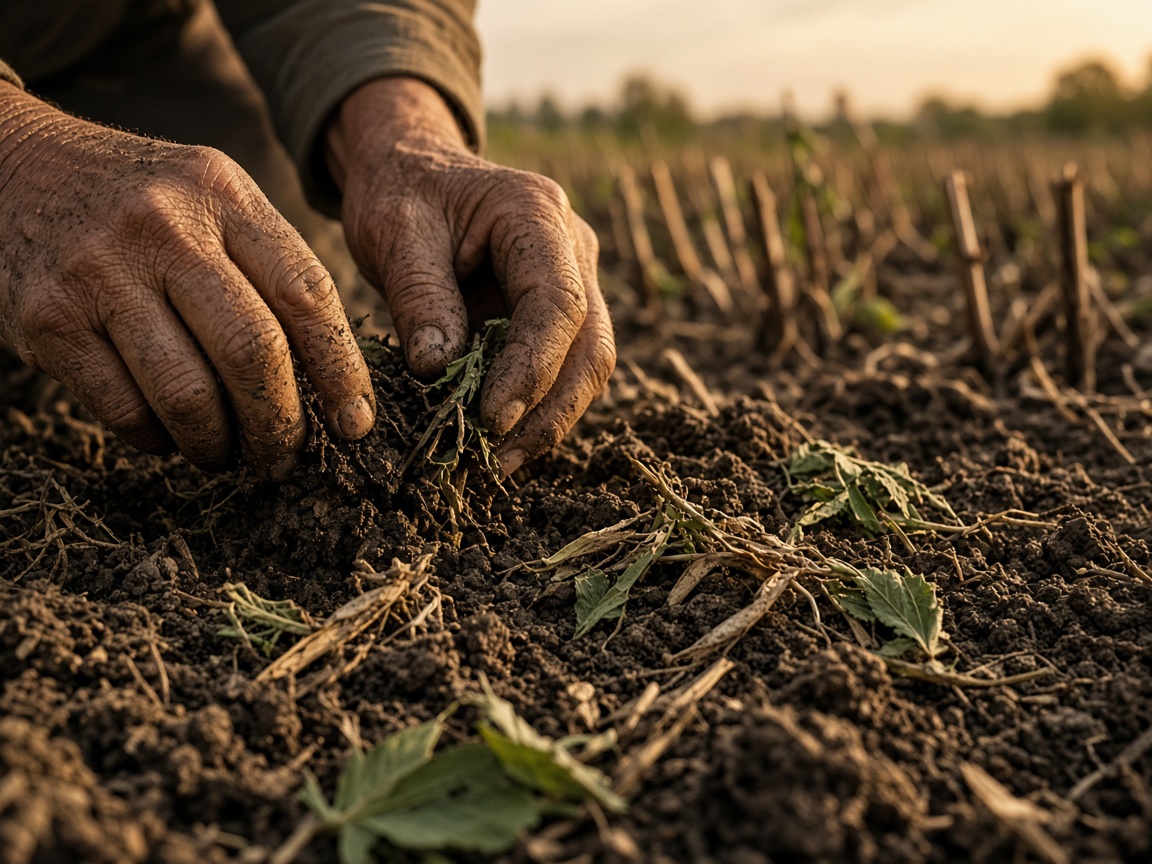
"Sun+Earth certification requires proof that the soil is alive through lab testing — not just no chemicals, but yes living biology." The soil health requirement is strict. Sun+Earth farmers must prove their soil has active microbial ecosystems — the tiny living things in the soil that feed the plant — through lab testing. This isn't just about what's missing (chemicals) — it's about what's there (living biology).
Pillar Two: Human Care and Fair Labor #
Sun+Earth is one of the only cannabis certifications with real labor standards that get enforced:
- Living wages — pay must meet or beat the local living wage
- Safe working conditions — including protection from heat, proper equipment, and chemical safety
- No forced or child labor — with checks on the whole supply chain
- Worker voice — ways for employees to speak up without getting fired
"In an industry with a long history of exploiting trim workers and farm hands, Sun+Earth's living wage and safety rules mark a real shift toward treating cannabis work like a real profession." This industry has a bad track record of exploiting trim workers and farm hands. These rules make sure the people growing your cannabis are treated like professionals, not disposable labor.
Pillar Three: Community Care and Giving Back #
The third pillar requires certified farms to give back to their local communities:
- Community programs and education
- Hiring locally when possible
- Supporting local organizations
- Running an honest, transparent business
- Taking care of the environment beyond their own land
This pillar recognizes that cannabis farms don't exist in a vacuum. They're part of local watersheds, neighborhoods, and economies. Sun+Earth farms must prove they're leaving their communities better than they found them.
Why Does Sun+Earth Mandate Sun-Grown Cultivation? #
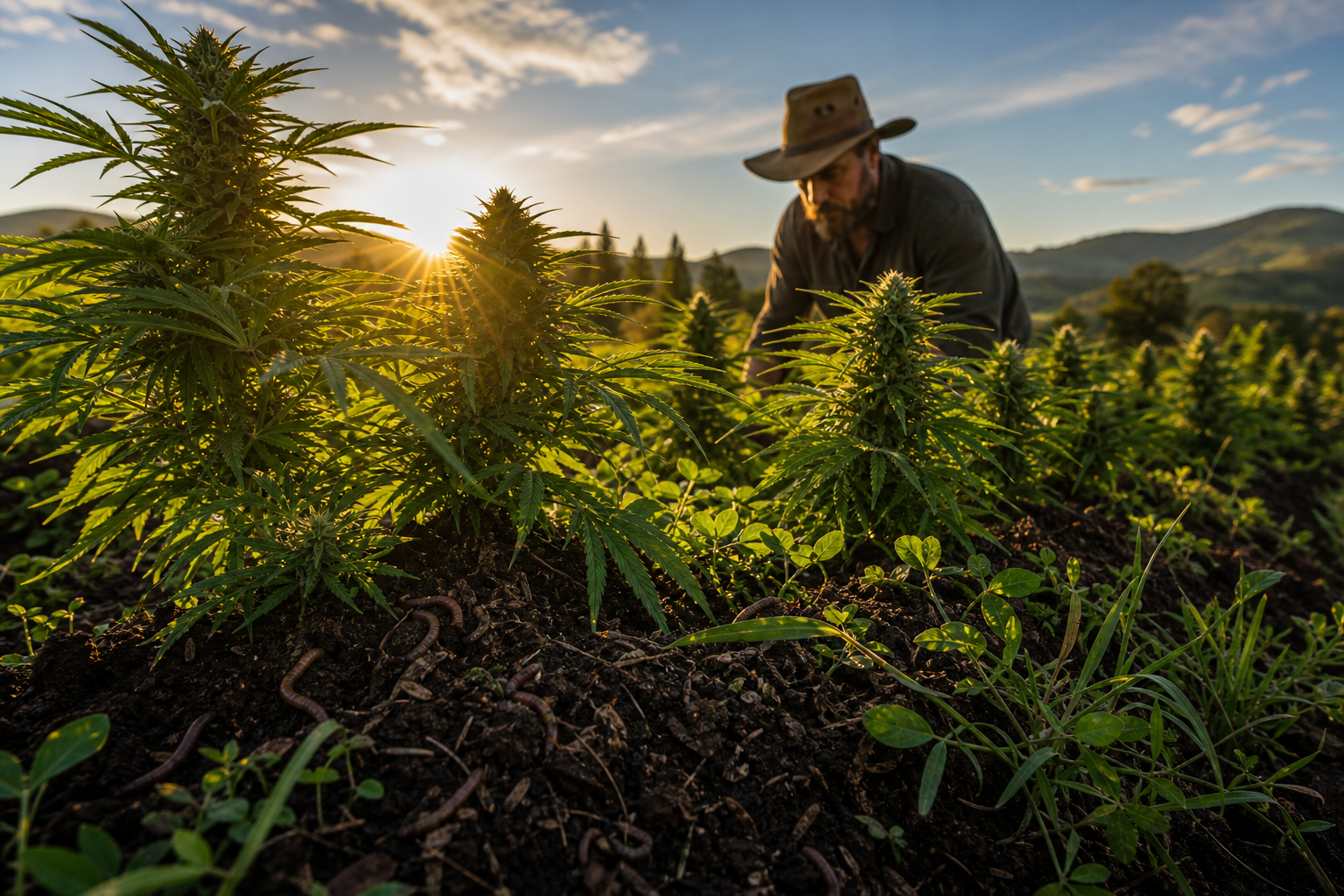
Sun+Earth requires outdoor or greenhouse growing under natural sunlight because full-spectrum UV light fundamentally changes the plant's chemistry in ways artificial lights can't copy. This rule ensures richer flavors, a wider mix of active ingredients, and a much smaller environmental footprint compared to indoor growing.
The Photobiology of Outdoor Cannabis #
UV light from the sun triggers defensive responses in the cannabis plant. When exposed to UV-B and UV-A light, cannabis plants produce:
- Higher terpene concentrations — the aromatic compounds that give flavor and also help with relief
- Broader mix of active ingredients — including lesser-known compounds like CBG, CBC, and THCV that indoor plants often lack
- More trichomes — the sticky resin glands that hold the active compounds
"Natural sunlight triggers chemical changes in the plant that artificial grow lights can't copy — creating the complex mix of flavors and active ingredients that make sun-grown cannabis work better." Indoor grows, even fancy ones, can't copy the full spectrum of natural sunlight. Grow lights are built for photosynthesis (growing plant matter), not for the light-triggered chemical changes that create the complex compounds we value in cannabis.
The Environmental Case #
Sun-grown cannabis has a much smaller carbon footprint than indoor growing:
| Factor | Indoor/Controlled | Sun-Grown Outdoor |
|---|---|---|
| Electricity per pound | 2,000-4,000 kWh | 100-300 kWh (processing only) |
| Carbon per pound | 1,000-2,500 kg CO2 | 50-150 kg CO2 |
| Water use | Varies — often higher due to climate control | Usually lower due to natural rain |
| Impact on nature | Industrial building, heavy AC use | Can blend with local nature |
One indoor cannabis facility can use as much electricity as 2,000 homes. Sun-grown growing basically wipes out that footprint. This environmental edge is one reason many consumers are asking: Is the indica-sativa divide actually meaningful, or does growing method matter more?
How Does the Sun+Earth Certification Process Work? #
Getting Sun+Earth Certified takes a tough multi-step process including detailed paperwork, multi-day on-site inspections with worker interviews, and ongoing monitoring through yearly renewals and surprise audits. Farms must prove their practices every year — there's no resting on past achievements.
Phase 1: Application and Documentation #
Farms submit detailed paperwork including:
- Three-year history of everything put on the soil
- Soil testing from certified labs
- Water source and conservation plans
- Labor policies and pay structures
- Community engagement records
Phase 2: On-Site Inspection #
A Sun+Earth inspector visits the farm for several days to check:
- Physical inspection of all growing areas
- Review of how inputs are stored and handled
- Private interviews with workers
- Assessment of water and energy systems
- Verification of community impact
Phase 3: Ongoing Compliance #
Certified farms face:
- Yearly renewal inspections
- Surprise audits (unannounced visits)
- Quarterly reporting requirements
- Required soil retesting every two years
"Farms that fail to keep up with Sun+Earth standards lose certification right away — there's no grandfather clause, and every year you must prove you're still meeting the standard through annual inspections and quarterly reporting." Farms that don't keep up lose certification. There's no resting on your laurels — every year, you prove you're still meeting the standard.
How Does Sun+Earth Compare to Other Cannabis Certifications? #
Sun+Earth is the only cannabis certification that combines strict organic standards with real fair labor rules, required community investment, and the environmental requirement of sun-grown cultivation. Unlike USDA Organic, Clean Green, or KindCertified, Sun+Earth checks not just how the plant is grown, but how workers are treated and how the farm affects its community.
| Certification | Organic Guarantee | Labor Standards | Community Requirements | Sun-Grown Mandate | Price Premium |
|---|---|---|---|---|---|
| Sun+Earth | Yes + must rebuild soil | Yes, enforced | Yes, enforced | Yes | Higher |
| USDA Organic | Yes (standard rules) | No | No | No | Moderate |
| Clean Green | Yes (like USDA) | No | No | No | Moderate |
| KindCertified | No | Yes | No | No | Small |
| No certification | Unknown | Unknown | Unknown | Unknown | None |
The key difference: Sun+Earth is the only certification that combines strict organic standards with real social responsibility rules and the environmental requirement of sun-grown cultivation. For a deeper dive into how these farming practices work together, see our guide on regenerative cannabis cultivation — the main post that covers the full farming philosophy behind our approach.
What Is the Real Impact of Sun+Earth on Your Cannabis Experience? #
Sun+Earth certification produces measurably different cannabis with 2-3x more terpene variety, a wider mix of active ingredients including lesser-known compounds, and stronger "all the ingredients working together like a team" effects compared to regular indoor flower. The strict standards create chemically complex medicine that delivers more nuanced relief than high-THC, single-note alternatives.
Chemical Complexity #
Sun-grown organic cannabis consistently shows:
- 2-3x more terpene variety compared to indoor hydroponic
- Measurable levels of lesser-known active compounds (CBG, CBC, CBN, THCV) often missing in indoor flower
- Lower pesticide risk (certified organic inputs only)
- No synthetic fertilizer residue
The Entourage Effect Advantage #
The broader chemical profile of sun-grown organic cannabis produces stronger "all the ingredients working together like a team" effects — the synergy between active compounds that makes whole-plant cannabis work better than isolated ones. When you have 30+ terpenes and 10+ cannabinoids working together, the effect is different (and for most purposes, works better) than high-THC flower with a narrow chemical profile. Learn more about why whole-plant cannabis consistently beats isolates at delivering benefits.
Why Did Detroit-Based Divine Toke Pursue Sun+Earth Certification? #
Detroit-based Divine Toke pursued Sun+Earth certification not to change our practices, but to get outside validation of the ethical farming we were already committed to. The certification process formalized what we were already doing — sun-grown cultivation in Michigan's living soil, fair wages for our team, and community investment — while making us better farmers through better record-keeping and stricter soil testing.
The Before and After #
Before certification, we were:
- Growing in living soil under Michigan sun
- Composting all organic waste and feeding it back to the soil
- Paying our team above living wage with full benefits
- Partnering with local Detroit community organizations
What changed with certification:
- Better record-keeping — we now track and verify everything, which improved our own processes
- Stricter soil testing — the microbial analysis requirement showed us ways to improve our compost teas
- Outside validation — our customers no longer have to take our word for it
- Formal community partnerships — structured relationships with local organizations that were previously informal
"The Sun+Earth certification process made Divine Toke into better farmers, better employers, and better community members — showing that strict third-party standards drive real improvement, not just marketing claims." The certification process made us better farmers, better employers, and better community members. That's exactly what a good standard should do.
What Does Sun+Earth Certification Cost and Why Does It Matter? #
Sun+Earth certification requires serious investment — typically $15,000-$30,000 per year in fees, inspections, and compliance paperwork — but that cost represents real value in verified organic practices, fair labor, and environmental responsibility. Consumers pay 15-30% more for certified products because they're funding farming that builds the soil back up, living wages for workers, and much lower carbon footprints.
That cost gets passed to consumers. Sun+Earth certified cannabis typically costs 15-30% more than conventional product.
Why It's Worth Paying For #
You're not just buying a label. You're paying for:
- Verified organic growing — no synthetic pesticides, period
- Living soil farming — farming that pulls carbon from the air and supports local ecosystems
- Fair wages — farm workers paid like professionals, not exploited labor
- Community investment — your dollars support local programs, not just corporate profits
- Lower environmental impact — much smaller carbon footprint vs. indoor grows
If those things don't matter to you, conventional cannabis is widely available and cheaper. If they do matter, Sun+Earth is one of the few certifications that actually guarantees them.
How Can You Verify Sun+Earth Certification? #
Consumers can verify Sun+Earth certification by checking the official registry at sunandearth.org, looking for the certification seal on packaging, and asking dispensaries to show the farm's current certificate. Legitimate certified operations can prove their status through all three channels — if a brand claims certification but can't prove it, they're misrepresenting their status.
- Look for the logo — the Sun+Earth seal shows a sun rising over farmland with three leaves
- Check the registry — Sun+Earth keeps a public database of certified farms at sunandearth.org
- Ask for the certificate — legitimate certified farms can show their current certificate
- Read the COA — Sun+Earth farms typically provide detailed lab reports showing terpene and cannabinoid variety
If a brand claims Sun+Earth certification but can't prove it through these channels, they're misrepresenting their status.
What Is the Future of Cannabis Certification? #
As of 2026, certification standards like Sun+Earth are becoming essential as consumers demand transparency, regulators require environmental disclosures, and climate realities make indoor growing increasingly unsustainable. Third-party verified standards represent the future of responsible cannabis production in an industry growing past THC percentages toward overall quality and ethics.
Consumer Education #
Cannabis consumers are getting savvier. The era of shopping purely by THC percentage is ending. People want to know how their cannabis was grown, who grew it, and what impact it had. Sun+Earth answers all three questions with outside verification.
Regulatory Pressure #
State regulators are increasingly requiring environmental and social disclosures for cannabis licenses. Farms that are already Sun+Earth certified are ahead of the game — they have the paperwork, processes, and outside verification that regulators are starting to demand.
Climate Reality #
Indoor cannabis growing is environmentally unsustainable at scale. As climate concerns become more urgent, sun-grown organic cannabis — the only kind that can achieve Sun+Earth certification — represents the future of responsible production.
FAQ: Sun+Earth Certified Cannabis #
Q: What does Sun+Earth Certified mean? #
A: Sun+Earth Certified is a strict third-party certification for cannabis that requires 100% organic growing in living soil under natural sunlight, fair labor practices with living wages, and documented community engagement. It goes beyond typical organic certifications by requiring farming that builds the soil back up and social responsibility.
Q: Is Sun+Earth better than USDA Organic for cannabis? #
A: For cannabis specifically, Sun+Earth is more thorough than USDA Organic. While both prohibit synthetic inputs, Sun+Earth also requires sun-grown cultivation (no indoor/artificial light), enforces fair labor standards, requires community give-back programs, and mandates active soil restoration rather than simply avoiding harm.
Q: Why does Sun+Earth require sun-grown cultivation? #
A: Natural sunlight triggers chemical responses in cannabis plants that produce richer flavor and a wider mix of active ingredients. UV light stimulates the plant's defensive compounds — the same compounds that produce therapeutic effects in humans. Indoor growing cannot copy the full spectrum of natural sunlight, resulting in less chemically complex flower.
Q: How much does Sun+Earth certification cost farms? #
A: Certification typically costs farms $15,000-$30,000 per year in fees, inspections, and compliance paperwork. This investment is why Sun+Earth certified products cost 15-30% more — consumers are paying for verified sustainable practices and fair labor.
Q: Does Sun+Earth cannabis taste or feel different? #
A: Many consumers report that sun-grown organic cannabis has richer flavor (due to more terpene variety) and more nuanced effects (due to a wider mix of active ingredients including lesser-known compounds like CBG, CBC, and CBN). The "all ingredients working together like a team" effect — synergy between multiple compounds — is typically stronger in chemically complex sun-grown flower.
Q: How can I verify a farm's Sun+Earth certification? #
A: Check the Sun+Earth registry at sunandearth.org, look for the official certification seal on packaging, and ask dispensaries to show the farm's current certificate. Legitimate certified operations can prove their status through all three channels.
Q: Is all organic cannabis Sun+Earth Certified? #
A: No. Many farms use organic practices without pursuing Sun+Earth certification. The certification provides outside verification that specific standards are being met, but uncertified organic farming is also common. The key difference is verification — Sun+Earth proves what others only claim.
Q: Why did Divine Toke pursue Sun+Earth certification? #
A: We pursued certification to get outside validation of practices we were already following — sun-grown cultivation in living soil, fair wages for our team, and community investment in Detroit. The process made us better farmers and gave our customers confidence that our claims are verified, not just marketing.
At Divine Toke, we grow sun-grown organic cannabis in Michigan's living soil because we believe medicine should be clean, sustainable, and produced by people who are treated with dignity. Our Sun+Earth certification proves it. If you're curious to try certified organic cannabis, browse our current selection — and ask about our regenerative growing practices.
Grown in Detroit. Shipped to your door.
Small-batch, sun-grown cannabis cultivated in living soil. Mail-order shipping to all 50 states.