A Closer Look at Cannabis Rescheduling: What Schedule III Means for Everyday Smokers
Curious about what the move to Schedule III means for your local dispensary runs? We break down the facts on prices, research, and daily consumption.

Head Cultivator
On this page
There's been a lot of conversation lately about the federal government moving cannabis from a Schedule I substance to Schedule III. With all the legal discussions and news headlines floating around, it's easy to wonder: What does this actually mean for those of us who just enjoy a good smoke?
If you're shopping adult-use or medical cannabis in Michigan — including Metro Detroit — federal Schedule III does not legalize weed here. Michigan already runs legal adult-use and medical markets under the Cannabis Regulatory Agency (CRA). This guide is not legal advice; it's a plain-language look at what federal rescheduling means for everyday buyers who still shop under state rules.
Table of Contents #
- Understanding Schedule III: The Basics
- What Changes on Your Next Dispensary Visit?
- The End of the 280E Tax Burden
- A New Era for Cannabis Research
- What This Means for Medical Consumers
- Will We See Cheaper Products?
- Rescheduling vs. Social Justice
- Keeping Our Youth Informed
- The Medical vs. Recreational Divide
- Looking Ahead: What’s Next?
- Frequently Asked Questions
1. Understanding Schedule III: The Basics #
Before we talk about how things affect your day-to-day, let's clear up what rescheduling is. It’s important to note that reclassifying cannabis isn't the same thing as federal legalization.
1.1 What is Schedule III? #
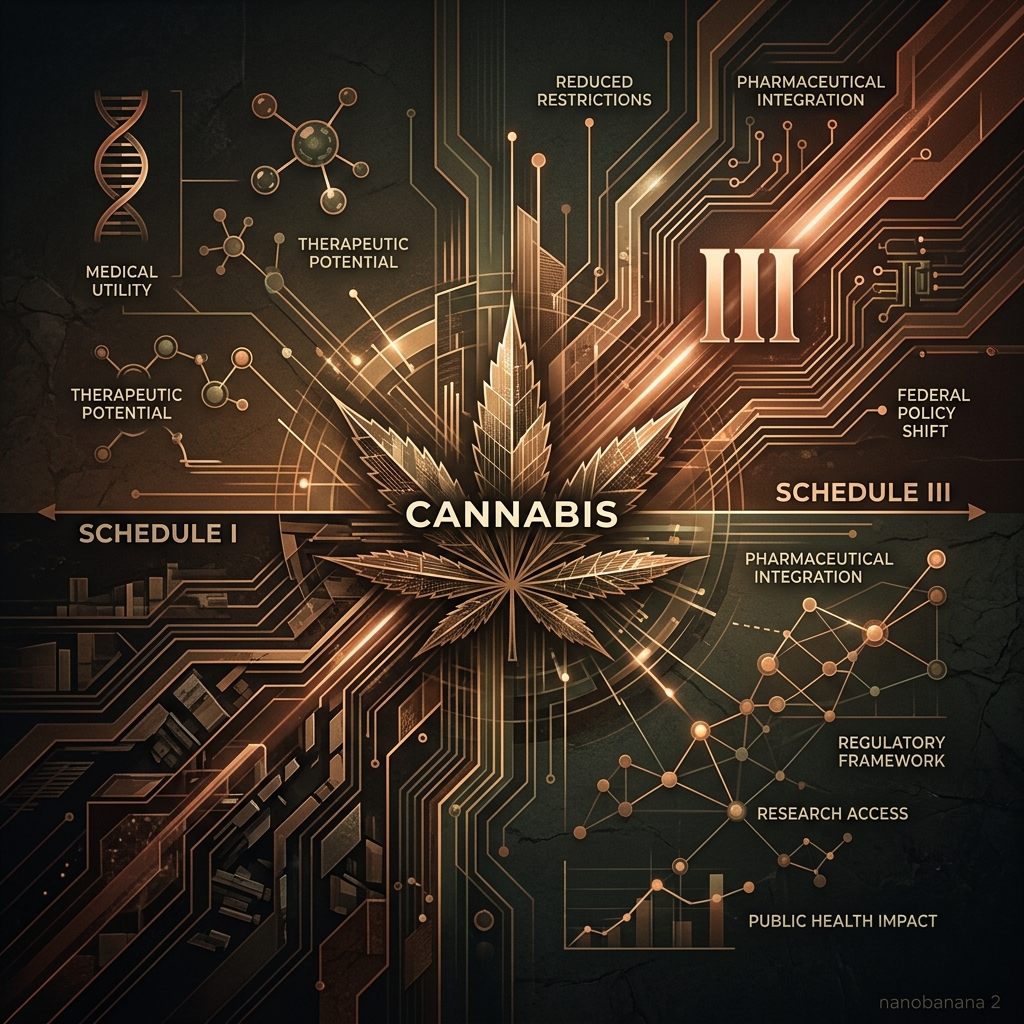
The DEA organizes drugs into five schedules based on their medical use and potential for dependency. Schedule III is meant for substances with a moderate to low potential for dependence and an accepted medical use. For context, other Schedule III items include things like certain codeine products and testosterone supplements.
1.2 Moving Away from Schedule I #
For a very long time, cannabis was stuck in Schedule I—alongside substances like heroin—which classified it as having no medical use. Moving it to Schedule III is essentially the federal government finally agreeing that cannabis does have medicinal value and isn't the high-risk substance it was once claimed to be.
1.3 Rescheduling Isn't Legalization #
This is the biggest takeaway: rescheduling isn't the same as making it fully legal. Federal laws against recreational use are still in place. While state laws protect you locally, consuming or selling outside of regulated medical channels is still technically a federal gray area. For Michigan shoppers, that distinction is practical: your day-to-day rules still come from the CRA and state law, not from the federal schedule alone.
2. What Changes on Your Next Dispensary Visit? #
A lot of folks expected immediate changes, but the reality is much more gradual.
2.1 Your Regular Dispensary Runs #
If you’re heading to the dispensary tomorrow, things will look pretty much exactly the same. You still need your ID, you’ll still pay your state's taxes, and the shelves will be stocked as usual. State rules still manage everything from purchase limits to consumption spaces.
2.2 The State vs. Federal Balance #
Because the federal rules haven't fully aligned with state laws, certain boundaries remain. For instance, you still can't legally cross state lines with cannabis, and it’s still prohibited in federal spaces like national parks.
2.3 The Reality of Shipping Across States #
We were all hoping that we could start getting our favorite out-of-state flower shipped directly to our local shops. Unfortunately, Schedule III doesn't allow for interstate commerce for recreational or state-medical markets just yet.
2.4 Michigan Still Runs the Shelf #
Whether cannabis sits in Schedule I or Schedule III federally, the Michigan Cannabis Regulatory Agency still sets the rules for licensed dispensaries — testing, labeling, purchase limits, and who can sell. Schedule III doesn't rewrite Michigan's adult-use or medical programs for Detroit-area buyers.
3. The End of the 280E Tax Burden #
While the shelves won't change overnight, the business side of cannabis is getting a huge break, which will eventually trickle down to us.
3.1 What is Section 280E? #
There's an old tax rule called Section 280E that prevented cannabis businesses from writing off normal business expenses (like rent and payroll) simply because they were dealing with a Schedule I substance.
3.2 How 280E Affected the Market #
Because of this rule, dispensaries and growers were facing massive tax rates—sometimes up to 80%. To stay afloat, they often had to keep retail prices a bit higher than they otherwise would.
3.3 Better Prices Down the Line #
Moving to Schedule III means this heavy tax burden is lifted. Over time, businesses will have more room to breathe financially. For us, this hopefully means we'll start seeing better deals, lower prices, and higher quality products as local growers can finally invest more into their craft.
3.4 Michigan Taxes Still Shape What You Pay #
Even if 280E relief helps shops keep more cash, Michigan adult-use product still faces state taxes that don't vanish with a federal schedule change. Since January 1, 2026, Michigan has imposed a 24% wholesale tax on adult-use marijuana — on top of the existing 10% retail excise tax and 6% sales tax, per Michigan Treasury guidance. For Detroit consumers, any future easing from 280E would still move through that Michigan tax stack, not replace it. This is tax background for shoppers, not tax or legal advice.
4. A New Era for Cannabis Research #
This might be the most exciting part for those who really care about the plant and its nuances.
4.1 Old Barriers to Studying the Plant #
When cannabis was Schedule I, it was incredibly difficult for scientists to study it properly. They were forced to use low-quality, government-grown cannabis that didn't resemble anything close to what we buy at a dispensary today.
4.2 Better Strains for Better Science #
With the move to Schedule III, researchers can finally start studying the actual, high-quality flower and concentrates that are in the market today. This means we're going to get real science on the products we're actually consuming.
4.3 Consistent Experiences #
More research means we'll better understand terpenes and minor cannabinoids. Eventually, this could lead to products with much more consistent effects—making it easier to find exactly what you need for sleep, relaxation, or creativity.
5. What This Means for Medical Consumers #
If you use cannabis for wellness or medical reasons, this shift brings some positive news.
5.1 The Path for New Medications #
Schedule III makes it easier for formal cannabis-derived medications to be developed and approved. While we won't see this tomorrow, it opens the door for more accessible, pharmacy-ready options in the future.
5.2 Insurance and Out-of-Pocket Costs #
Will your health insurance cover your dispensary trip now? Not quite. Insurance typically only covers FDA-approved medications. For now, dispensary runs remain an out-of-pocket expense, but future approved medications might be covered.
5.3 Shifting the Stigma #
Moving cannabis out of the Schedule I category helps reduce the stigma in the traditional medical world. It should become much easier to have open, honest conversations with your doctor about your cannabis use.
6. Will We See Cheaper Products? #
The short answer is yes, but it will take some time.
6.1 The Waiting Game for Price Drops #
We won't see a massive price drop next week. It will take time for businesses to process their tax savings and adjust their pricing models. But the long-term outlook is very positive for our wallets.
6.2 Healthier Local Growers #
With more capital, local cultivators can invest in better growing practices and cleaner extraction methods. This helps stabilize the supply chain, which usually translates to better prices for consumers.
6.3 A Healthier Market #
As businesses become more stable, we'll likely see a healthier, more competitive market. And more healthy competition usually means better options and fairer prices for everyone.
7. Rescheduling vs. Social Justice #
It's also important to acknowledge where this policy change falls short for many communities.
7.1 It's Not Decriminalization #
Because cannabis is still federally illegal for recreational use, people can still face federal prosecution. This change doesn't automatically clear the records of folks who were previously incarcerated.
7.2 The Ongoing Impact #
Many advocates point out that while this is a step forward for the industry, it doesn't do enough to repair the historical harms of prohibition, especially in marginalized communities.
7.3 The Work Left to Do #
For those of us who care about the culture and the community, it's a reminder that the work isn't done. True equity and full decriminalization are still goals worth supporting.
8. Keeping Our Youth Informed #
With any policy change, there's always a risk of mixed messaging, especially for younger people.
8.1 The "Safe" Misconception #
Medical experts worry that moving cannabis to a lower schedule might make it seem completely harmless. While it is much safer than other substances, it isn't without its risks.
8.2 Mindful Consumption #
Some studies suggest that heavy use during adolescence can lead to psychological dependence. It's important to approach consumption mindfully and ensure we're educating younger folks about responsible use.
8.3 Listening to the Experts #
Even though the laws are relaxing, keeping a grounded, informed perspective on cannabis is just as important as ever.
9. The Medical vs. Recreational Divide #
We might see some slight shifts in how different types of dispensaries operate.
9.1 A Split System #
Some industry analysts suggest that the new tax benefits might primarily apply to medical operators rather than fully recreational ones, since the DEA regulates medical substances.
9.2 The Value of a Medical Card #
Because of this, it might still be very worthwhile to hold onto your state medical card. Medical dispensaries might have more financial flexibility to offer better prices or discounts compared to purely recreational shops.
9.3 Navigating the Changes #
For businesses that do both, it might get a bit tricky with accounting, but as a consumer, your main focus will just be keeping an eye out for where the best value is in your local community.
In Michigan, medical and adult-use already sit on different CRA tracks. A medical card can still mean different access and pricing at licensed shops even if federal research expands under Schedule III. Check the CRA for current medical vs adult-use program details — again, this isn't legal advice.
10. Looking Ahead: What’s Next? #
This is just the first step in a long process of normalization.
10.1 The Slow Rollout #
Rescheduling takes time. There are public hearings and administrative processes that have to happen before everything is set in stone.
10.2 The Need for Broader Reform #
Ultimately, true permanent change will require action from Congress. Bills regarding banking and full descheduling are still being debated.
10.3 A Brighter Future #
For those of us who love the plant, the future is looking much brighter. We can look forward to a more normalized, affordable, and quality-focused market. Keep supporting the growers and shops that care about the plant, and enjoy the journey ahead.
Frequently Asked Questions #
Q: Can I fly with my cannabis now? #
A: No, unfortunately not. Airports are regulated federally, so flying with cannabis is still prohibited, even between states where it's legal.
Q: Will dispensary prices drop right away? #
A: Not immediately. It will take time for businesses to feel the relief from the tax changes, but we should see better prices over the coming months and years.
Q: Is weed legal everywhere in the US now? #
A: No. This changes how the federal government categorizes it, but your state laws still dictate what you can and can't do locally.
Q: Does Schedule III make cannabis legal in Michigan? #
A: No. Michigan already legalized adult-use and medical cannabis under state law regulated by the CRA. Federal rescheduling doesn't replace those Michigan rules for Detroit or anywhere else in the state.
Q: Can I use my health insurance for cannabis purchases? #
A: No. Insurance only covers FDA-approved medications, so standard dispensary purchases will still be out-of-pocket.
Q: Are dispensaries taking credit cards now? #
A: Not right away. Major credit card companies are waiting for further legislation (like the SAFER Banking Act) before they open up their networks to cannabis sales.
Q: Does this change drug testing for federal employees? #
A: No. Federal workplaces still maintain their drug-free policies, and cannabis use is still prohibited for those employees.
Q: What exactly is Section 280E? #
A: It's an old tax rule that charged cannabis businesses extremely high tax rates. Removing it lets businesses keep more of their money to invest in better products and lower prices.
Q: Can dispensaries ship products across state borders now? #
A: No. Interstate shipping still requires federal oversight that state-level dispensaries don't have.
Q: Will the quality of our weed get better? #
A: Very likely! Better research and healthier local businesses mean more innovation and higher-quality, more consistent products for all of us.
Q: Does this help people with past cannabis convictions? #
A: No. This is a regulatory change moving forward and doesn't retroactively clear past records or offer amnesty.
Wrap Up #
The move to Schedule III is a massive step away from the outdated policies of the past. While it isn't full legalization, it lifts heavy burdens off the businesses we love and opens the door for real, helpful research. For us everyday consumers, it points toward a future with better products, fairer prices, and a more normalized culture. The changes might be slow, but they are definitely moving in a positive direction.
Grown in Detroit. Shipped to your door.
Small-batch, sun-grown cannabis cultivated in living soil. Mail-order shipping to all 50 states.