How to Roll the Perfect Joint: A Beginner's Guide
Rolling a joint isn't hard — it's just never been properly explained. Step-by-step, from grind to filter, with the common mistakes that trip up beginners.
Questions this article answers
- how to roll a joint for beginners
- what papers are best for rolling
- how to make a filter tip for a joint

Head Cultivator
On this page
Rolling a joint is a fundamental cannabis skill — whether you're learning on a Detroit porch or packing for a Michigan weekend. It's not about talent — it's about technique, and technique can be learned in 15 minutes. Most beginners struggle because nobody breaks it down properly. Here's the real step-by-step.
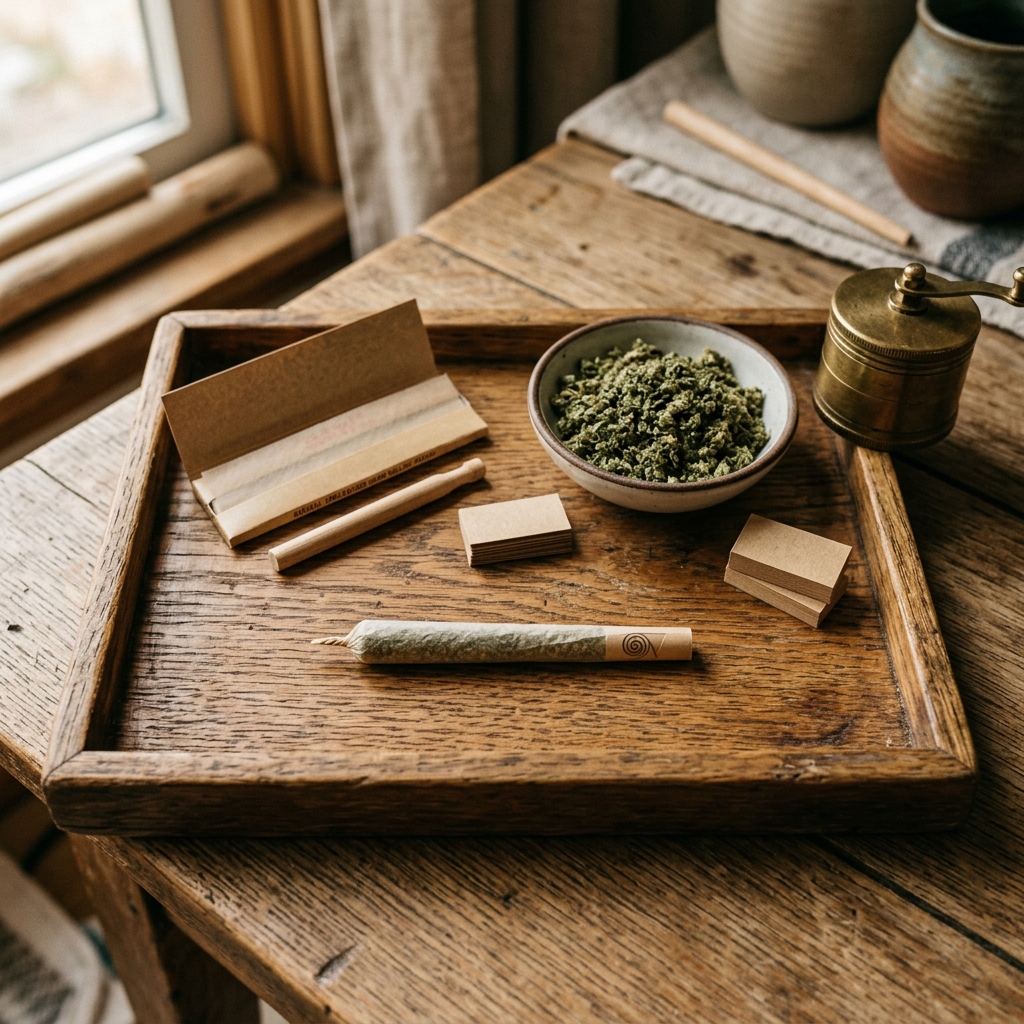
What You Need #
| Item | Purpose | Recommendation |
|---|---|---|
| Cannabis flower | The main event | ~0.5g for a standard joint, ~0.75-1g for a king-size |
| Rolling papers | The wrapper | Unbleached, natural papers (hemp or rice) |
| Grinder | Consistent particle size for even burn | 2-piece minimum, 4-piece with kief catcher ideal |
| Filter/crutch | Airflow, structure, keeps flower out of your mouth | Unbleached cardboard or pre-made filter tips |
| Flat surface | Workspace | A tray, book, or clean table |
Choosing Your Papers #
Not all papers are equal:
- Hemp papers — slightly thicker, easier for beginners, natural flavor
- Rice papers — ultra-thin, burn slow, require more skill
- Unbleached — avoid chlorine-bleached white papers when possible
- Size — 1¼ is standard; king-size for larger joints
Step-by-Step: Rolling Your First Joint #
Step 1: Grind Your Flower #
Break your cannabis down with a grinder until it's a consistent, fluffy texture — not powder, not chunks. Even particle size is the single biggest factor in how your joint burns. Uneven grind = uneven burn = canoeing and frustration.
Beginner mistake: Don't grind too fine. Powder restricts airflow and makes the joint hard to draw. Think "coarse sea salt" texture.
Step 2: Make Your Filter #
Take a small piece of cardboard (most rolling paper packs include filter material) and fold it into an accordion — 3-4 small folds, then roll the remaining cardboard around them to form a cylinder about the width of a pencil.
The filter does three things:
- Creates consistent airflow
- Gives structure to the mouthpiece end
- Prevents flower from pulling into your mouth
Step 3: Fill the Paper #
Hold the rolling paper in one hand, gum strip facing up and away from you. Place the filter at one end. Distribute ground flower evenly along the paper's length, creating a slight cone shape (a little more at the tip, less at the filter end).
How much? For a standard 1¼ paper, ~0.5g is comfortable. Don't overstuff — less is more when you're learning.
Step 4: Shape and Tuck #
This is where most beginners struggle. Here's the technique:
- Pinch the paper between your thumbs and index fingers
- Roll the flower back and forth between your fingers to shape it into a cylinder — you're packing and shaping, not rolling yet
- Once the flower feels evenly shaped, tuck the front edge of the paper (the non-gum side) around the flower and under the back edge
- Start the tuck at the filter end — this is the anchor point. Once it catches at the filter, the rest follows
The key insight: You're not wrapping paper around flower. You're tucking paper UNDER flower. The tuck is a downward motion, not a wrap-around.
Step 5: Roll Up and Seal #
Once the paper is tucked at the filter end:
- Roll upward smoothly, guiding the paper around the flower
- When you reach the gum strip, lick it lightly (or moisten with a damp finger)
- Seal by pressing gently — don't squeeze the joint flat
- Twist the open end to close it and pack the flower slightly
Step 6: Pack and Final Touches #
Use a pen, chopstick, or the non-eraser end of a pencil to gently pack the flower down from the open (twisted) end. This ensures even density and a smooth burn. Don't pack too tight — air needs to flow through.
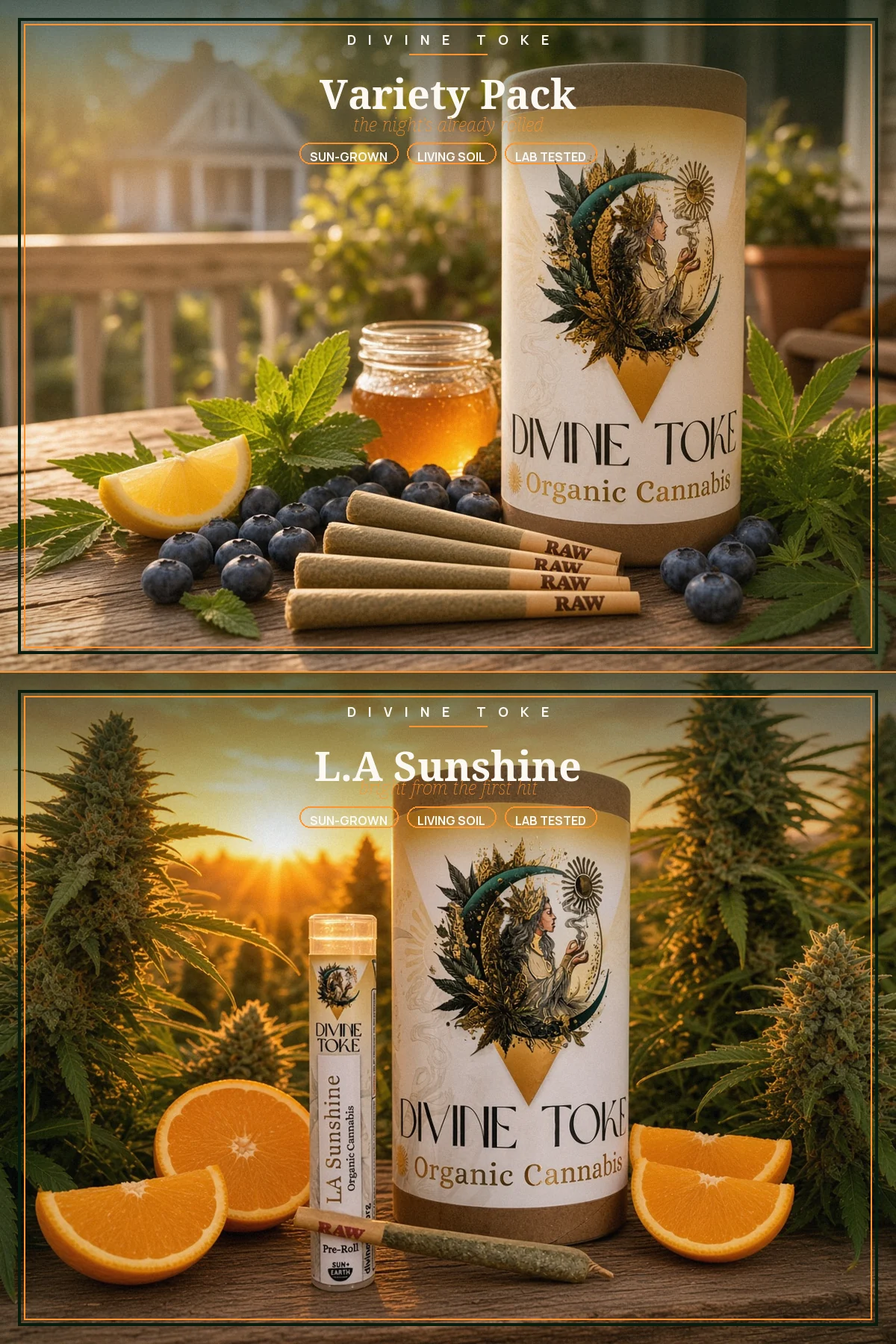
Already rolled. Twenty 1g joints.
If the paper is still fighting you, grab a 20-pack and smoke tonight instead.
The 5 Most Common Beginner Mistakes #
| Mistake | Why It Happens | How to Fix It |
|---|---|---|
| Canoeing (burns unevenly down one side) | Uneven grind or uneven fill | Grind more consistently, distribute flower evenly |
| Too loose (falls apart, ash drops) | Not enough flower or not shaped before tucking | Add slightly more flower, spend more time shaping |
| Too tight (hard to draw, barely produces smoke) | Overpacked or ground too fine | Use less flower, grind coarser |
| Paper tears during rolling | Wet fingers, aggressive handling | Keep hands dry, use gentle pressure |
| Filter falls out | Not rolled tight enough at the filter end | Make the filter slightly wider, tuck paper firmly around it first |
Why the Flower Matters #
A perfectly rolled joint with bad flower is still a bad experience. For the best smoke:
- Fresh flower — terpenes degrade over time. Use flower within 6 months of purchase.
- Proper cure — well-cured flower burns evenly and smoothly. Harsh, uneven burns often indicate a poor cure.
- Clean flower — organic, pesticide-free cannabis means you're not combusting chemical residues with every hit.
At Divine Toke, our sun-grown organic flower is raised in living soil under Michigan sunshine — and it burns clean, slow, and smooth. Detroit smokers notice that difference fast: a joint is the most honest format there is, because you're tasting every aspect of how that flower was grown.
If you're rolling at home and heading out later, remember Michigan's vehicle rule. Under MCL 750.474, usable cannabis in a motor vehicle must be enclosed in a case in the trunk — or, if there's no trunk, in a case that isn't readily accessible from the interior. Rolling skill is one thing; legal transport is another.
FAQ: Rolling Joints #
Q: How much weed do I need for one joint? #
A: A standard joint uses ~0.5 grams of ground flower with 1¼ size papers. A king-size joint uses 0.75-1 gram. Pre-rolled cones can hold up to 1.5 grams depending on the size.
Q: What's the best rolling paper for beginners? #
A: Unbleached hemp papers in 1¼ size are the most beginner-friendly. They're slightly thicker than rice papers (easier to handle), burn evenly, and don't add chemical taste.
Q: How do I stop my joint from canoeing? #
A: Canoeing is caused by uneven grind, uneven fill, or inconsistent density. Use a quality grinder, distribute flower evenly, and pack to a uniform density. If it starts canoeing while smoking, rotate the joint and apply flame briefly to the slow-burning side.
Q: Are pre-rolled cones cheating? #
A: No. Pre-rolled cones are a legitimate convenience product. You fill and pack them — the rolling is done for you. If hand-rolling frustrates you, cones are a perfectly valid option that produces consistent results.
Q: Should I mix tobacco with my cannabis? #
A: That's a personal choice, but from a health perspective, pure cannabis joints avoid the known carcinogens in tobacco. Many European smokers mix (spliffs), but in the US, cannabis-only joints are standard and arguably healthier.
Q: Why does my joint go out if I stop puffing? #
A: This usually means the flower is too moist or packed too tightly. Properly cured flower at the right humidity (58-62% RH) stays lit. If your flower is too fresh or damp, let it dry slightly before rolling.
Q: How long does a joint last? #
A: A standard 0.5g joint typically lasts 5-10 minutes of steady smoking, or 15-20 minutes if you're passing it around and taking breaks. Factors include grind consistency, paper thickness, and packing density.
Q: Is smoking joints the healthiest way to consume cannabis? #
A: Combustion produces tar and carbon compounds regardless of the material. Vaporization is healthier because it heats without burning. However, joints remain popular for their ritual, portability, and simplicity — including across Michigan's adult-use scene. If you smoke joints regularly, using clean, organic flower minimizes the additional burden of pesticide residue combustion.
Practice makes perfect. And perfect practice starts with perfect flower — the kind Michigan sun-grown living soil was built to deliver.
Grown in Detroit. Shipped to your door.
Small-batch, sun-grown cannabis cultivated in living soil. Mail-order shipping to all 50 states.